
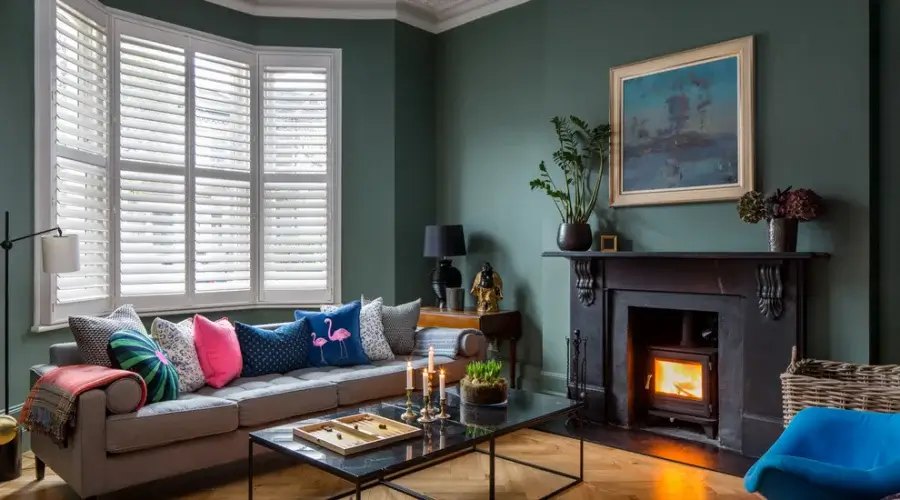
Interior designers suggest tips for choosing the right colour for our home’s walls by looking to our wardrobe, our memories and our everyday life.
One of the most affordable ways to transform a room is to paint the walls. But how do you choose a colour if you don’t have anything specific in mind? An interior designer can help you narrow down to a general colour category, such as yellow, grey, white or green. A professional can also recommend a specific colour to you.
But before you commit, it’s worth thinking about what your favourite colours are. We asked 3 interior designers how to figure out what that colour is. Their practical tips will give you the confidence you need to choose.
Visit Your Wardrobe
Whatever you do, don’t go straight to the paint shop to pick colours from the fan decks, because there are thousands of shades and you’ll be overwhelmed. Of course, if you’ve already done this, know that you’re not alone. Most people entrust the painting of their home to a decorator without having chosen a colour yet. Before you go to the paint shop, you should have narrowed down your options, even before you pick out the samples. But how do you narrow down your colour choices from the start? Designer Keith Wardlaw suggests looking in your wardrobe. “The first thing I tell my clients is to look inside their wardrobe and see which colours they wear most often,” he says. “They’ll lean towards the colours that suit them best. Is there a better way to make a home look perfect than to paint it in the colours that look perfect on us too?”
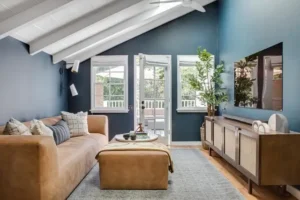
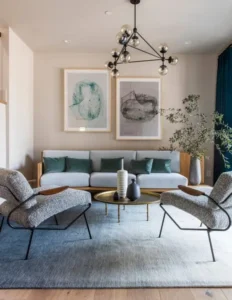
A browse through your wardrobe can also help you find ideas for the accent shades you’ll use to highlight the main colour. For example, if you tend to wear blue and pair it with khaki, tan leather shoes and silver jewellery, then these colours could be the base palette for your home. You can bring this palette into your living room with blue walls, leather furniture and grey (or silver) details such as rugs or cushions, as shown in the photo.
Dig Up Your Childhood Memories
Porter, a Washington-based designer and owner of several colour workshops, gives her clients questionnaires about their personal relationship with colours. “What colour was your room when you were a child?” she asks. “Which colour makes you happy?”
Inspiration can come from anywhere. “Maybe your grandmother’s kitchen was yellow and you have wonderful memories of it. Maybe you saw the perfect shade of blue on a trip to the Caribbean and it calms you,” she says.
Even if no colour comes to mind after looking back on your memories, try to find a photo from one of your favourite trips and see whether any colour catches your interest. In your everyday life, when you go to restaurants, shops or even friends’ homes, pay attention to the colours that attract you most.
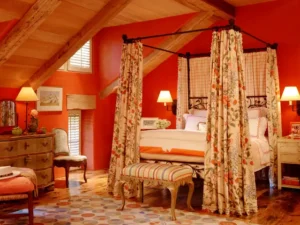
There are no rules for the ideal colour, says Porter. One of her clients chose a bright red for her bedroom, a colour considered more “energising” than relaxing. For most people, red may be a colour that keeps you alert and doesn’t help you sleep, but “it calms her (my client),” she says. “You need to know what moves you and not be influenced by what others like or by what people say.”
Imagine the Feeling You Want the Space to Have
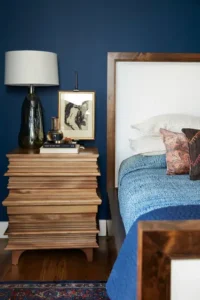
OK, you’ve decided to paint the room blue. How do you settle on a shade of blue? It would help to think about the feeling you want to give the room, says Wardlaw. If you want a “warmer” atmosphere, choose a deep, dark blue. To achieve a more serene feeling, a lighter blue is probably better.
As you observe the shades of blue, think about whether you prefer those that lean towards lavender, towards green, or pure shades. It’s useful to know the colours “hidden” within the shades you choose, so you can select the decorative elements that will frame the room’s central theme. A good interior designer can help you see these “hidden” colours and help you choose the shade that best matches your furniture and your space in general.
Also consider whether the colour you choose will be warm or cool, and in this case the help of an expert is invaluable. If you’re starting from scratch, whether you choose a cool grey or a warmer grey will make no difference to you. But if you already have furniture and accessories in warm shades, for example, then it would be best to choose a warmer shade so that it “ties in” with your space.
Look for Inspiration
Search the internet for ideas and colours and evaluate the ones that inspire you, that is, whether you prefer light or dark colours. Keep in mind that the colours you choose will look different on your wall than on your computer or phone screen. They’ll be affected by the light coming into the room, and even by the way it does so. If you “fall in love” with a colour you saw online, find a sample and bring it home before you commit. Even on the fan deck you see at the paint shop, the colour may differ somewhat from how it will look on your wall, so it’s very important to test it on your wall before you buy the amount you need for the whole room.
Narrow Down Your Options to Four at Most
Once you’ve settled on a general colour, an expert can help you choose the final shade. If you want to choose on your own, you can bring a fan deck home and do the “sorting out” yourself there.
“Let’s say you go home having chosen 8 shades of blue. Look at them carefully and you’ll start to see that they differ from one another. Some lean towards red and others towards light blue. There are also those that, in the end, you won’t like at all.
Limit yourself to three or four colours. You can place the colour chart you have on the wall you’re going to paint, or use a sheet of white paper underneath for a neutral background. Remember that colours will look darker against a light background and lighter against a dark background. Often, when we compare the colours with one another, it becomes clear which colour is best for us.
You can also look at each colour on its own. Something equally important, but also something we easily forget: as you evaluate the colours, take into account the objects that are already in the space (and that you don’t want, under any circumstances, to change).
Test the Colour on Your Wall
Once you’ve chosen the colours, it’s time to test them. It’s best to test all the samples on your wall, because that’s exactly where you’ll be using the colour, on the wall. You also need to test the sample on the wall because you’re painting over another colour, and that can affect the shade.
Experts advise that when you test the samples on the wall, they should be placed side by side so you can compare them and choose by process of elimination. Of course, if this seems tiring to you, you can look at each one separately.
It’s also important to pay attention to the finish of the samples you buy (matt, satin, gloss), because this will affect how the colour looks on the wall. Many shops stock the small tester pots only in matt. It’s best to buy a larger pack to see what the real result will look like.
Look at the samples on the wall at various times during the day and in different lighting to see how this affects the shades. Live with these colours for a few days. When a colour wins you over, then you’re ready to paint your home.
source: https://www.houzz.com/